7 Powerful Content Marketing Strategies to Grow Your Business
Content marketing has become one of the most effective ways for businesses to attract potential customers, build trust, and establish a strong online presence. Instead of simply telling people to buy a product or service, businesses can create useful and engaging content that answers questions, solves problems, educates audiences, and helps customers make better decisions.
Whether you run a small local business, an online store, a professional service, or a growing brand, having a clear content marketing strategy can help you connect with the right audience and create long-term relationships with customers. However, successful content marketing is not simply about publishing content whenever you have time. It requires planning, consistency, creativity, and a clear understanding of what your audience needs.
In this article, we will explore seven powerful content marketing strategies that businesses can use to attract their target audience, increase engagement, build credibility, and grow their business online.

Why Content Marketing Matters for Businesses
Content marketing gives businesses an opportunity to communicate with their audience without relying entirely on direct advertising. People are constantly searching for information online before making purchasing decisions. They may want to understand how a product works, compare different services, find solutions to a problem, or learn more about a particular business.
By providing useful information through blogs, videos, social media posts, guides, images, and other forms of content, a business can become a valuable source of information for its target audience.
Good content can also help a business establish credibility. When customers consistently find helpful information from a brand, they are more likely to view that business as knowledgeable and trustworthy. Over time, this trust can influence purchasing decisions and turn visitors into loyal customers.
Content marketing can therefore support different stages of the customer journey, from creating awareness to encouraging consideration and eventually supporting conversions.
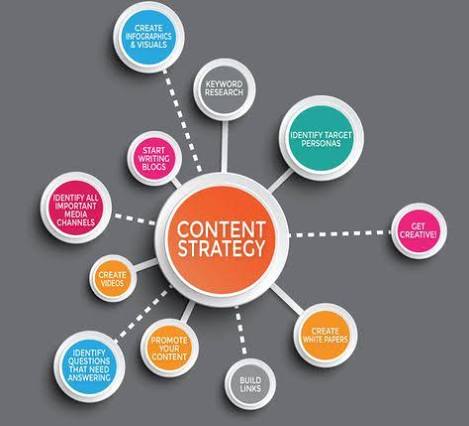
1. Understand Your Target Audience
One of the most important parts of a successful content marketing strategy is understanding who you are creating content for. Without knowing your audience, it becomes difficult to create information that people actually want to read, watch, or share.
A business should take time to understand its ideal customers, including their interests, needs, challenges, questions, and purchasing behavior. Think about the problems your customers face and the information they may search for before choosing your product or service.
For example, a clothing boutique may discover that its customers are interested in styling ideas, fashion trends, outfit combinations, clothing care, and advice on choosing outfits for different occasions. Instead of constantly posting promotional messages, the boutique can create content around these interests.
Understanding your audience allows your business content to become more relevant and useful. When people feel that your content speaks directly to their needs, they are more likely to engage with it and remember your brand.

2. Create Valuable and Educational Content
The second strategy is to focus on providing value. Content should give your audience a reason to pay attention to your business.
Educational content is particularly useful because it helps customers learn something while introducing them to your brand. A business can create guides, tutorials, explanations, tips, case studies, articles, videos, or answers to frequently asked questions.
For example, a website design company could publish an article explaining why businesses need professional websites. A restaurant could create content about food preparation, menu recommendations, or cooking ideas. A fashion business could publish styling guides or seasonal fashion advice.
The goal is not to create content simply for the sake of publishing. Every piece of content should have a purpose and provide something useful to the audience.
When businesses consistently provide valuable information, they can build stronger relationships with potential customers and position themselves as helpful resources within their industries.
3. Use Different Types of Content
People consume information in different ways. Some prefer reading articles, while others enjoy watching videos, viewing images, listening to audio, or scrolling through social media posts.
For this reason, businesses should avoid depending on only one type of content. A strong content marketing strategy can combine different formats to reach people with different preferences.
Blog articles can be useful for providing detailed information and answering common customer questions. Short-form videos can help businesses demonstrate products, explain services, or share quick educational ideas. Images and graphics can communicate information quickly, while social media posts can encourage conversations and engagement.
For example, a single blog article could be transformed into several social media posts, a short video, an infographic, and a series of educational graphics. This allows a business to make better use of its ideas while reaching audiences across different platforms.
Using different content formats can also make a brand’s online presence more interesting and engaging.

4. Tell Your Brand Story
People do not always connect with businesses simply because of their products or services. They also connect with stories, experiences, values, and personalities.
Storytelling can make business content more human and memorable. Instead of constantly talking about what a company sells, businesses can share how they started, why they created their products, the challenges they have overcome, and the people behind the brand.
For example, a small business owner can share the story behind starting the business and the problem they wanted to solve. A fashion brand can explain how its designs are created. A digital marketing agency can share its journey, experiences, and lessons learned while helping businesses improve their online presence.
Authentic storytelling can help customers understand the personality behind a business. It can also create an emotional connection that traditional promotional messages may not achieve.
The key is to keep the story genuine. Customers can often recognize when content feels forced or overly promotional. Authentic stories are more likely to create meaningful connections.
5. Maintain a Consistent Content Schedule
Creating excellent content once is not enough. Businesses need consistency if they want to build a strong online presence.
A content schedule helps businesses organize what they will publish, when they will publish it, and which platforms they will use. Without a plan, businesses may publish several times in one week and then disappear for an entire month.
Consistency does not necessarily mean publishing every day. The right schedule depends on the business, its audience, available resources, and the type of content being created. What matters most is creating a realistic schedule that the business can maintain.
For example, a business might publish one detailed blog article every week, several social media posts throughout the week, and one short video each week. Another business may choose a different schedule based on its resources.
Planning content in advance can reduce stress and make it easier to maintain a professional online presence. A content calendar can also help businesses avoid repeating the same ideas and ensure that different topics are covered over time.

6. Create Content That Encourages Engagement
Content should not always be a one-way conversation. Businesses should create opportunities for their audiences to respond, ask questions, share opinions, and participate in discussions.
Engagement can be encouraged through questions, polls, discussions, customer stories, interactive posts, and calls to action. For example, a fashion business could ask followers which outfit they prefer. A restaurant could ask customers about their favorite menu item. A service provider could ask its audience about the biggest challenge they currently face.
Responding to comments and messages is equally important. When people take the time to interact with a business, acknowledging them shows that the brand values its audience.
Engagement can help businesses understand their customers better. Comments and questions can reveal what people are interested in, what problems they have, and what information they need. These insights can then be used to create future content.
In this way, content marketing becomes more than simply publishing information. It becomes a conversation between the business and its audience.
7. Measure Your Content Marketing Results
A content marketing strategy should not be based entirely on guesswork. Businesses need to understand whether their content is actually achieving its intended goals.
Different businesses may measure different results depending on their objectives. A business focused on awareness may pay attention to reach and impressions. A business focused on engagement may look at comments, shares, saves, and interactions. A business focused on generating customers may monitor inquiries, leads, website visits, and conversions.
Measuring performance helps businesses identify which content works best and which areas need improvement.
For example, if educational videos consistently receive more engagement than promotional posts, the business may decide to create more educational videos. If certain blog topics attract significant website traffic, those topics can provide ideas for future content.
The purpose of measuring results is not simply to collect numbers. It is to learn from the audience and improve the content strategy over time.

How Content Marketing Can Help Turn Audiences Into Customers
One of the biggest advantages of content marketing is that it can support customers throughout their buying journey.
A person may first discover a business because of an educational article, social media post, or video. After finding useful information, they may begin following the business or visiting its website. Over time, additional valuable content can help build trust and demonstrate the company’s expertise.
Eventually, when that person needs the product or service offered by the business, the brand may already be familiar to them. This can make the purchasing decision easier because the customer has already developed some level of trust.
However, businesses should avoid making every piece of content a sales pitch. Constant promotion can make audiences lose interest. A better approach is to balance educational, entertaining, inspirational, and promotional content.
The goal is to provide value first while making it easy for interested customers to take the next step.
The Importance of Quality in Content Marketing
Publishing a large amount of content does not automatically produce good results. Quality matters.
High-quality content should be accurate, useful, easy to understand, relevant to the target audience, and consistent with the brand. Businesses should focus on creating content that genuinely helps people rather than simply trying to increase the number of posts they publish.
A single well-researched article that answers an important customer question can be more valuable than several short posts that provide little useful information.
Quality also applies to presentation. Clear writing, professional images, readable graphics, good video production, and consistent branding can make content more appealing and easier to consume.
When quality and consistency work together, businesses can create a stronger and more professional online presence.

Common Content Marketing Mistakes Businesses Should Avoid
Many businesses struggle with content marketing because they focus too much on selling and not enough on helping their audience. Constantly promoting products or services can make content feel repetitive and reduce engagement.
Another common mistake is creating content without a clear audience. If a business does not know who it is speaking to, its content may become too general and fail to connect with potential customers.
Inconsistency is another challenge. A business may start with enthusiasm but stop creating content after a few weeks. Building a strong content presence requires patience and commitment.
Businesses should also avoid copying competitors. While it is useful to study what works in an industry, each brand should develop its own voice, ideas, and approach.
Finally, businesses should not expect immediate results. Content marketing is often a long-term strategy. Building an audience, developing trust, and generating consistent results takes time.
How Content Marketing Works With Other Digital Marketing Strategies
Content marketing becomes even more powerful when it works together with other areas of digital marketing. Social media can help distribute content and create engagement, while website design provides a professional place where customers can learn more about a business.
Email marketing can also help businesses share useful content directly with subscribers. Paid advertising can promote important content to a larger audience, while other digital marketing activities can help attract people to the business.
For this reason, content should not exist separately from the rest of a company’s marketing strategy. Instead, it should support the overall goal of attracting, engaging, and converting the right audience.
A well-planned content marketing strategy can therefore become an important part of a complete digital marketing system.
Conclusion
Content marketing gives businesses a powerful way to attract audiences, provide value, build trust, and create long-term customer relationships. However, successful content does not happen by simply posting whenever inspiration comes. It requires a clear understanding of the target audience, valuable ideas, consistent publishing, engaging formats, authentic storytelling, and continuous measurement.
The seven strategies discussed in this article can give businesses a strong foundation for creating better content and building a more effective online presence. Whether you are a small local business or an expanding brand, the most important principle is to create content that genuinely helps the people you want to reach.
At Prex Digital Marketing Agency, we believe that effective digital marketing starts with understanding your audience and communicating with them in meaningful ways. With the right content marketing strategy, your business can turn useful information into stronger relationships, greater brand awareness, and sustainable growth.